- Gigabyte has revealed new OLED monitors at CES 2026
- A new HyperNits HDR feature seeks to improve brightness levels and avoid dimming issues
- Tandem OLED is also used here to boost brightness and reduce burn-in risks
CES 2026 is coming to a close, and there have been plenty of big reveals regarding gaming, but we're not done yet – a major manufacturer might just have solved one of the biggest issues with OLED gaming monitors.
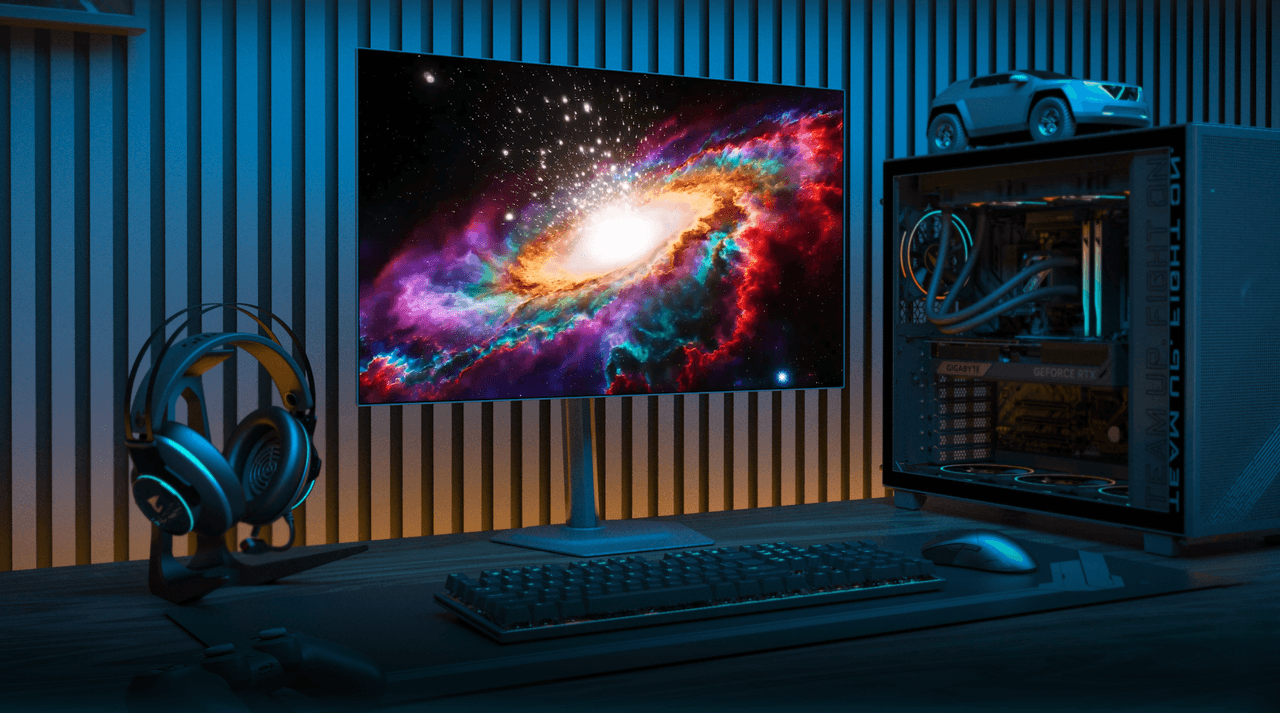
As reported by KitGuru, Gigabyte has unveiled its new OLED gaming monitors at CES 2026, utilizing a new HDR feature called 'HyperNits' to address OLED Average Picture Level (APL) issues. To put it simply, HyperNits promises to increase overall brightness levels while avoiding blown-out highlights.
The Auto Brightness Limiter (ABL) on OLED monitors is designed to protect them from burn-in and increased power consumption, activating when APL levels are high – meaning when bright areas occupy a significant portion of the screen.
This has been problematic for gaming scenarios, as games (or even movies) can frequently shift from dark to bright or vice versa, leading to frustrating experiences with overall brightness dimming. It's one of the few advantages mini-LED displays have over OLEDs – ABL still exists to some extent on mini-LEDs, but it's not nearly as aggressive as it is on OLEDs.
This was noticeable in my Mobile Pixels 34-inch mini-LED ultrawide review, where blooming and haloing were downsides, but brightness was consistent even when APL levels were at 100% (gaming in full-screen), showcasing mini-LED's main advantage over OLED.
Gigabyte's HyperNits aims to enhance brightness consistency with OLED displays, claiming '30% more brightness' overall when the feature is enabled on the new MO27Q28GR OLED monitor (a mouthful of a model name, I know).
It's also a major plus that the MO27Q28GR is using a tandem OLED panel. This technology improves brightness levels, power efficiency, and reduces the risk of OLED burn-in by stacking two OLED layers together.
With both of these innovations working together, we could be looking at a significant advancement for OLED displays moving forward.
Analysis: OLEDs Could Move Further Ahead of Mini-LEDs If This Works
OLEDs remain on top in the battle against mini-LEDs, and some would even argue that there was no battle to begin with. Deep black levels on both are great for gaming immersion, but OLED takes the win in that department – although it's not quite the same story in terms of brightness.
While there are many OLED displays capable of 1,000 nits or more in HDR, the mentioned APL issues prevent them from maintaining high brightness levels without noticeable dimming, whereas mini-LEDs excel at consistently high brightness.
If the combination of tandem OLED and HyperNits can overcome such brightness limitations, we could see a scenario where mini-LED is completely left behind, potentially losing what's arguably its only major advantage over OLED monitors.