- Lexar AI-Grade Storage Stick introduces a hot-swappable AI-Grade stick for high-performance AI laptops
- Modular design promises instant storage expansion without shutting down systems
- Practical adoption remains uncertain due to unknown pricing and vendor support
Lexar has launched a modular AI-Grade Storage Stick aimed at enhancing storage capacity on compatible business laptops and mobile workstations.
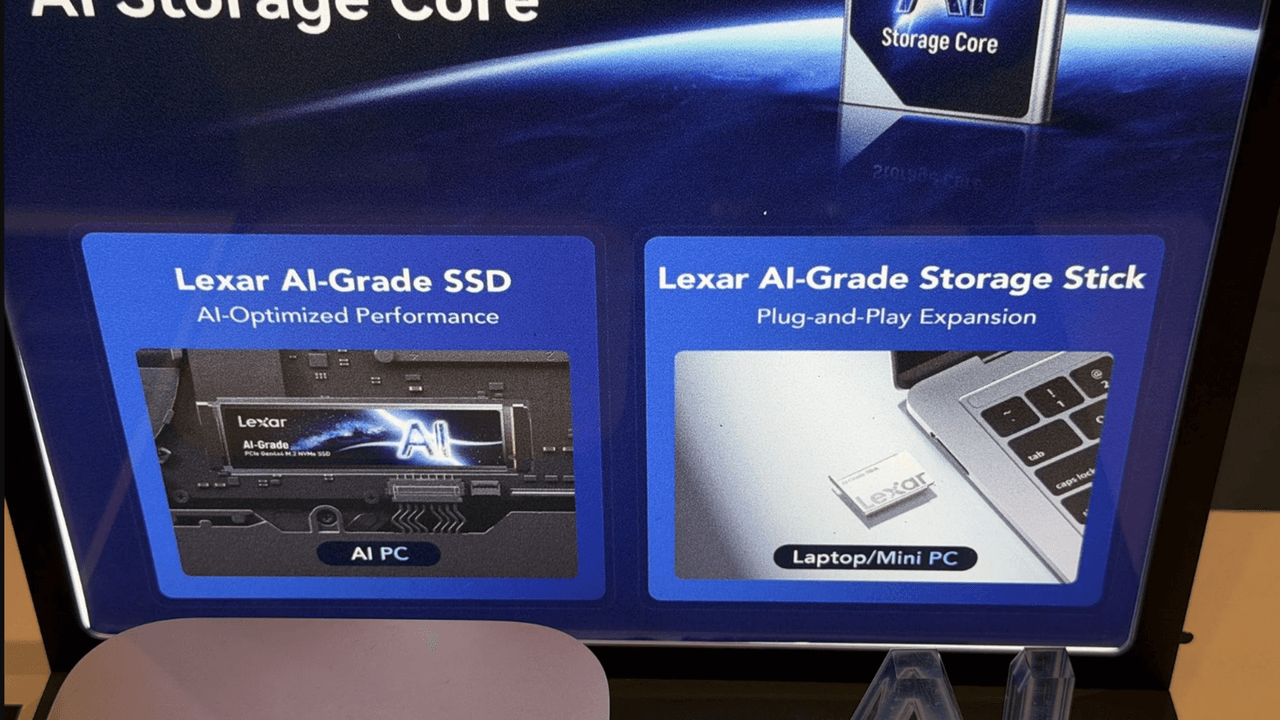
Unveiled at CES 2026, this storage stick supports hot swapping, enabling users to instantly increase storage without powering down their devices.
Despite its technical appeal, the pricing and potential adoption by device manufacturers remain unclear, raising questions about its practical applications.
Designed for AI Workloads
The AI-Grade Stick is crafted for high-performance computational tasks, promising rapid speeds ideal for AI-driven applications.
Its compact, modular design emphasizes portability and immediate access, suggesting it could be valuable for professionals needing flexible storage solutions on the go.
When connected, the device integrates directly with the host system, rather than functioning as a passive external unit.
Lexar clarifies that it is not a substitute for internal SSDs but offers an additional expansion option for systems with limited built-in capacity.
What sets it apart from traditional SSDs is its focus on AI workloads, designed to maintain consistent performance during extended tasks.
“The AI-Grade Storage Stick is not a single finished product or SKU, but a new storage form factor built on Lexar’s AI Storage Core,” a company spokesperson stated.
“As a result, final performance, capacity, and pricing will vary based on implementation and target devices, with details to be shared closer to launch.”
Without benchmark data, the actual performance under sustained workloads remains uncertain.
Security features are a significant aspect of Lexar’s 2026 offerings, and the stick is expected to benefit from the company’s emphasis on encrypted storage.
Lexar’s TouchLock portable SSD demonstrates that NFC dual-encryption and smartphone-based unlocking are feasible in a compact format, hinting at similar capabilities for the stick.
In addition to the stick, Lexar also introduced its AI-Grade SSD, designed to manage heavy AI workloads with sustained throughput and low latency.
While the SSD supports larger capacities and traditional form factors, the modular stick aims to provide flexibility and swappability.
However, the stick’s practical relevance is challenging to gauge due to a lack of manufacturer announcements indicating support for the device.
Compatibility, cost, and reliability will be crucial in determining whether it gains widespread use or remains a niche product.