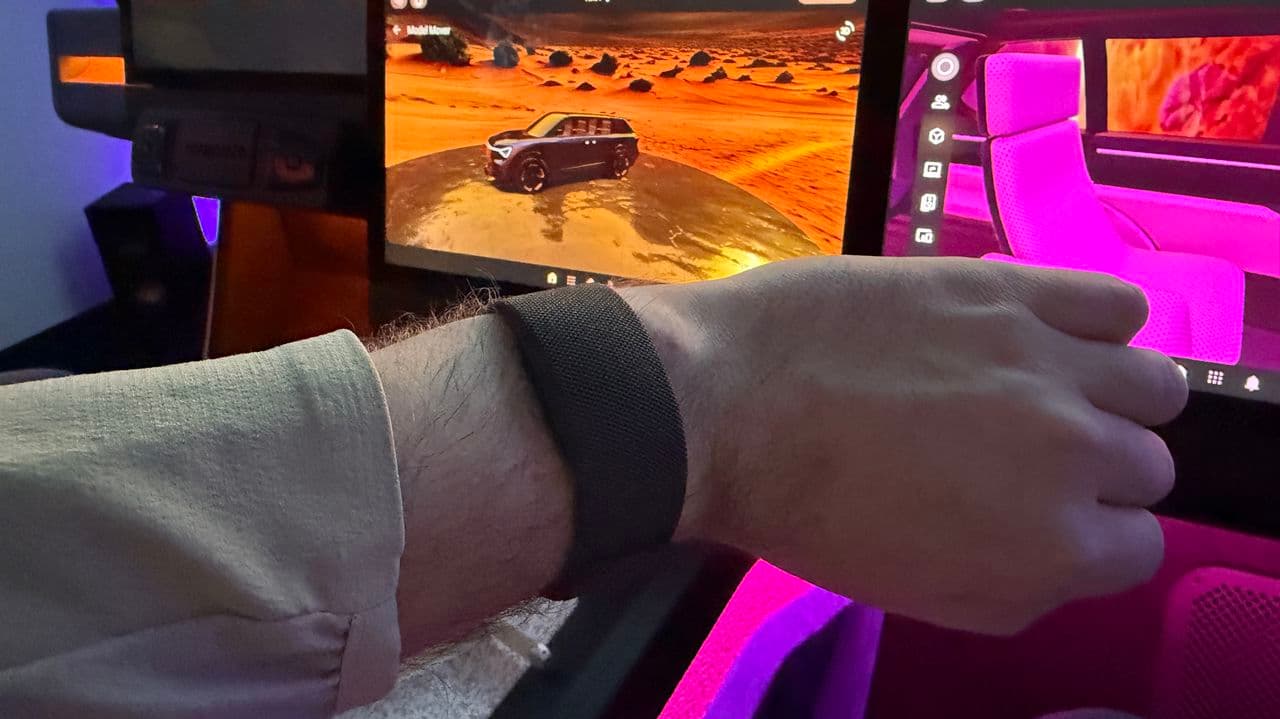
Meta’s Neural Band, known for its role as a controller for the Meta Ray-Ban Display Glasses, may eventually be available separately, compatible with various devices.
At CES 2026, Garmin unveiled a concept for its next-generation in-vehicle systems, showcasing a computer that can manage more than just a heads-up display. This system integrates dynamic lighting, ultra-wideband technology, and various input methods, including voice and hand gestures.
During the demo, I experienced the concept firsthand in a stationary car model. Wearing the Meta Neural Band, I was able to manipulate the car's digital interface on the main screen, including zooming in and out. While basic, this demonstration illustrated the potential of these input methods in automotive environments.
This initiative is part of Garmin’s Unified Cabin concept, aimed at creating a smarter vehicle interior. The collaboration with Meta explores how the Neural Band can enhance user interaction.
Instead of traditional voice commands or touch gestures, users could control the interface with subtle hand movements. While seated in the passenger seat, I found I could perform gestures just above my lap to navigate the display. Although limited, this method allowed for swiping and interacting with various elements.
Interestingly, the concept lacked a steering wheel, but it raises questions about its functionality with hands on the wheel, particularly regarding safety. The Neural Band operates by detecting finger movements through electrical signals from the wrist, providing haptic feedback for a more intuitive experience.
The Unified Cabin concept also demonstrated the potential of ultra-wideband technology to recognize the position of digital keys, whether they are fobs, phones, or possibly the Neural Band in the future. This could enhance user experience by adjusting settings based on who is in the driver's seat.
While still a concept, it’s exciting to see how automotive technology is evolving. The Neural Band may one day be sold independently, potentially serving as a smart car key.
Our publication has been extensively covering this year's CES, bringing you all the major announcements as they happen. Visit our CES 2026 news page for the latest updates on everything from wireless TVs to new phones and AI advancements.