Arthur C. Clarke once said, "Any sufficiently advanced technology is indistinguishable from magic." This sentiment resonated with me during a recent demonstration in Las Vegas, where I encountered a groundbreaking innovation in eyewear.
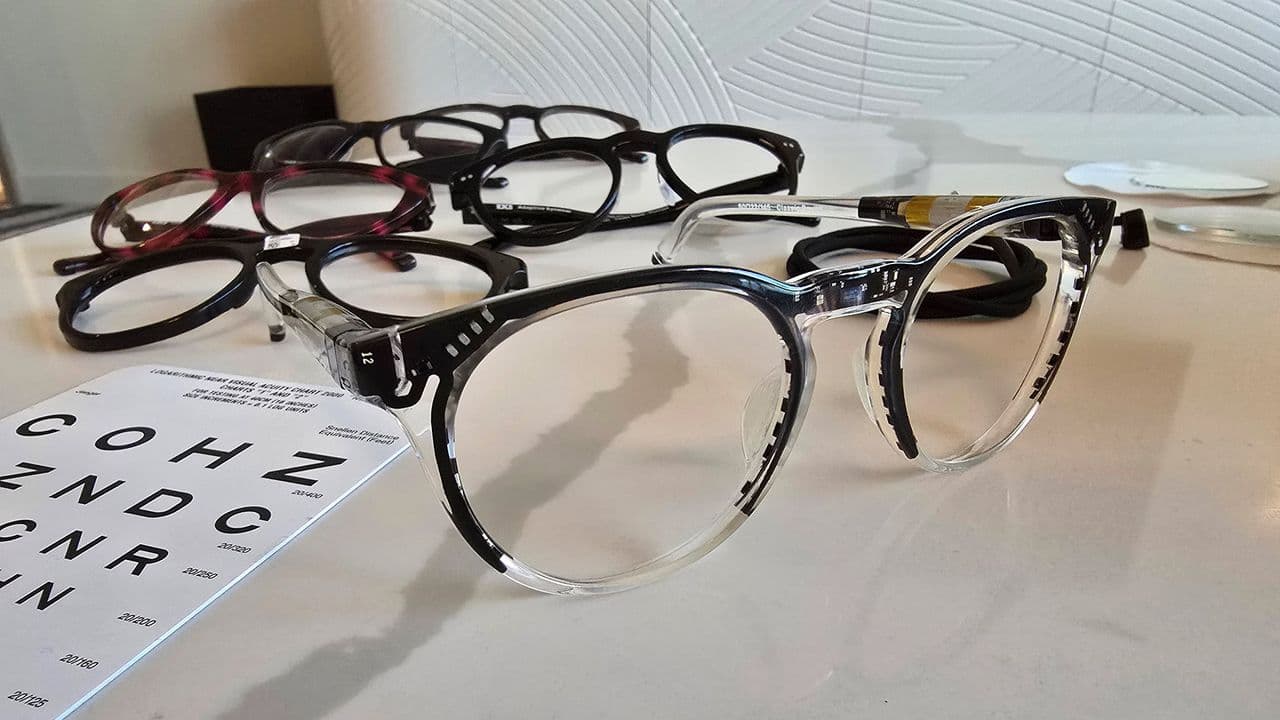
Before me lay a selection of eyeglasses that could easily be mistaken for those from popular brands like Warby Parker or Luxottica. However, these frames are equipped with remarkable technology that allows the lenses to automatically adjust focus based on what you're looking at. If you're reading something close, the lenses magnify; if you're gazing into the distance, they revert to normal vision.
This innovation is the culmination of over four years of research and development, with an investment of approximately $45 million, and was created by a team that includes a rocket scientist.
“We’re redefining eyewear on a really high level,” said Niko Eiden, co-founder and CEO of the Finnish startup IXI. “I like to use a camera analogy: fixed focus, manual focus, and then autofocus. What we’re trying to do is autofocus, as opposed to the fixed focus that is common today.” As someone who wears progressive lenses, the concept is incredibly appealing.
The array of eyeglass components displayed was meant to illustrate the manufacturing process, but the reality hit me when I saw Eiden wearing a functioning pair—just 22 grams of pure innovation. This is not just a concept; it’s a tangible product that is truly impressive.
Inside the World’s First Autofocusing Eyeglasses
So, how does this technology work? IXI's product consists of three main components: lenses that can be adjusted using a unique liquid crystal material sandwiched between two layers of plastic; an eye-tracking system that detects where you're looking and adjusts the focus accordingly; and a frame that resembles ordinary glasses.
Yes, you will need to charge these eyeglasses via a USB cable that magnetically attaches to the frame, but the benefits are worth it. The glasses contain small 35mAh batteries located in the temples, providing around 18 hours of usage—significantly less than the Ray Ban Meta Gen 2, making IXI's design incredibly efficient.
The electronics are integrated into a printed circuit board within the frame, featuring a computing unit over the nose bridge and circuits neatly tucked away. Instead of using a camera, the system relies on the reflectivity of the eye to determine where you're looking.
“When an eye rotates with respect to the frame, its fingerprint changes,” Eiden explained. A series of infrared LEDs illuminate the eye, while photodiodes capture the reflection at a rate of 60 frames per second, which is standard for eye-tracking technology.
This light spectrum passes through the plastic frame but reflects off the eye, allowing the technology to remain discreetly hidden. Given that our eyes take 200-300 milliseconds to refocus, the 60fps tracking is seamless and unnoticeable.
Eyes on with IXI
During the demonstration, Eiden showcased a sample lens, which displayed a shimmering disc that vanished with a simple command. I examined the lens closely and noticed faint traces of the electrical circuits that control the liquid crystal material, creating concentric rings that are invisible when worn.
In September, IXI acquired a lens manufacturing facility in Finland and partnered with Optiswiss, a leading European lens manufacturer, following a $36.5 million funding round. The 22-gram prototype was unveiled at CES, showcasing its readiness for market.
“It’s a Fresnel pattern. But a very special one.”
Niko Eiden, co-founder and CEO of IXI
Initially, IXI considered licensing the technology but found that the existing industry lacked the capability to implement such sophistication. Eiden, who holds a master's degree in aeronautical engineering and has experience at CERN and Nokia, decided to take on the challenge himself.
The data collected from the eyetracker is intriguing, revealing insights into user behavior and alertness. For instance, Eiden shared his blink rate data while wearing the glasses, noting his anxiety and focus levels.
While the price point for IXI eyeglasses is not yet finalized, Eiden indicated they would fall within the high-end eyewear range, likely around €1,000. A small price for what feels like magic.