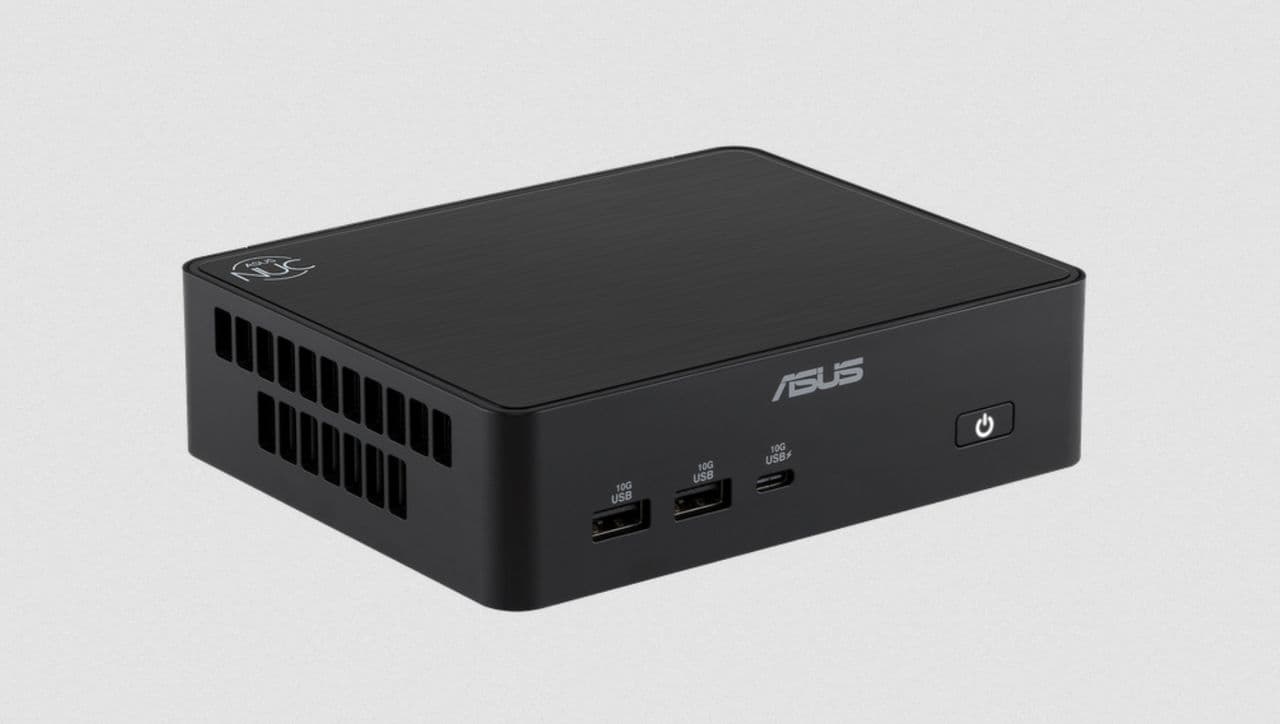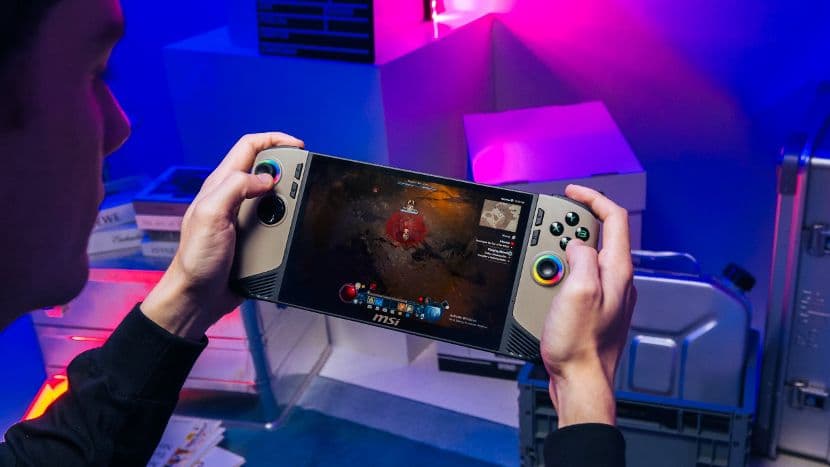
- Intel announced a new handheld gaming platform featuring the Panther Lake series
- Collaborations with MSI, Acer, GPD, and Microsoft suggest several new devices are on the horizon
- While these devices won't arrive immediately, more information is anticipated later in 2026
Although there hasn't been much news regarding handheld gaming PCs at CES 2026, Intel has hinted at the possibility of significant new launches later in 2026.
According to a report by Notebookcheck, Intel is set to introduce handheld devices powered by its Panther Lake processors. This initiative includes partnerships with MSI, Acer, GPD, Microsoft, and Onexplayer, with further updates expected later this year.
With Lenovo and Asus recently launching the Legion Go 2 and the ROG Xbox Ally X, these manufacturers appear to be sidelined for a refresh of handhelds utilizing the new Intel chips, indicating that new devices may not be forthcoming from them for a while.
This scenario opens the door for major players like MSI to develop a successor to the Claw AI+ handhelds, which currently utilize Intel's Core Ultra 7 258V processor.
Intel's performance claims for the Panther Lake's Arc B390 integrated GPU suggest it is 73% faster than AMD's Radeon 890M while consuming less power, indicating that Intel could pose a serious challenge to AMD in the handheld market.
If a new MSI Claw device is built around a Panther Lake CPU, it could deliver significantly improved performance compared to most current mainstream handhelds. Intel claims this represents next-gen handheld gaming performance.
Additionally, XeSS 3, supported by Panther Lake and older Xe integrated graphics, offers multi-frame generation benefits, a feature previously seen only in Nvidia's RTX 5000 series GPUs.
In the broader context, the competition between AMD and Intel in the handheld market is heating up.
Analysis: Intel is Strengthening Its Position in the Gaming Market
While AMD's Ryzen AI Max+ 395 APU delivers gaming laptop-level performance for the GPD Win 5 and other high-end handhelds, Intel's Core Ultra 7 258V remains the standout chip for me.
This processor powers the MSI Claw AI+ handhelds, which I consider the best handheld I've used to date. While the Claw's $899 price was a point of contention, the nearly $2,000 price tag of Max+ 395 handhelds makes the Claw a more appealing option.
If Intel's generational performance leap claims hold true, we can expect a significantly more powerful successor to the MSI Claw 8 AI+ featuring a Panther Lake chip. This would further solidify Intel's presence in gaming hardware, especially with the anticipated release of its Arc B770 discrete GPU, rumored to include 16GB of VRAM.
There's much to anticipate from both AMD and Intel, not only in the desktop GPU sector but also for SoCs and their robust integrated graphics for handhelds. I'm excited to see what unfolds in 2026.